Wednesday, April 27, 2016

Mindful Awareness

UCLA Mindful Awareness Research Center

Mindfulness is making the news these days. It has been depicted in the media primarily as a tool to hone attention, to cultivate sensory awareness, and to keep us in the present moment.

Developing these tools takes effort and determination, but why is it we can sometimes be mindful without really even trying? Perhaps we were naturally mindful at points in life before we ever learned what mindfulness was. Maybe we feel naturally connected, present, and at ease in nature. Or we become mindful while talking authentically with a friend, or in the midst of music, art, or athletic activity.

Mindfulness is not only a meditation technique, but also a state of being. This state is available to anyone; it is a natural human capacity. Mindfulness practice, as a tool, is tremendously helpful to cultivate this awareness, and the state can arise at any moment. Mindfulness is also connected to a set of powerful outcomes: happiness, emotional regulation, compassion, altruism, and kindness.

We encourage you to attend an array of offerings to cultivate the moment-to-moment awareness, which is the foundation of our practice.


 Link: http://marc.ucla.edu/

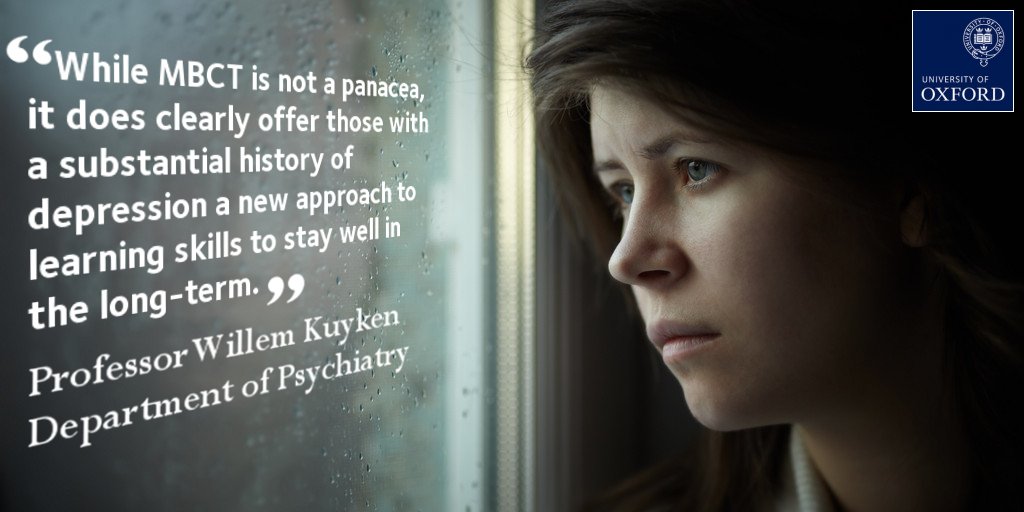
Mindfulness-based cognitive therapy can help prevent recurrence of depression.


Review finds mindfulness-based cognitive therapy can help prevent recurrence of depression.

Friday, January 15, 2016

The Science and Practise of Happiness


Uploaded on Jul 1, 2011

Is happiness a skill? Modern neuroscientific research and the wisdom of ancient contemplative traditions converge in suggesting that happiness is the product of skills that can be enhanced through training and such training exemplifies how transforming the mind can change the brain. 

Kent Berridge, Richie Davidson, and Daniel Gilbert speak at the Aspen Ideas Festival
.


A sense of purpose in life


Conclusion:

A sense of purpose in life also gives you this considerable advantage:
"People with a sense of purpose in life have a lower risk of death and cardiovascular disease."

The conclusions come from over 136,000 people who took part in 10 different studies.

Participants in the studies were mostly from the US and Japan.


The US studies asked people:
  • how useful they felt to others,
  • about their sense of purpose, and
  • the meaning they got out of life.


The Japanese studies asked people about ‘ikigai’ or whether their life was worth living.

The participants, whose average age was 67, were tracked for around 7 years.

During that time almost 20,000 died.
 
But, amongst those with a strong sense of purpose or high ‘ikigai’, the risk of death was one-fifth lower.

Despite the link between sense of purpose and health being so intuitive, scientists are not sure of the mechanism.

Sense of purpose is likely to improve health by strengthening the body against stress.

It is also likely to be linked to healthier behaviours.

Dr. Alan Rozanski, one of the study’s authors, said:
“Of note, having a strong sense of life purpose has long been postulated to be an important dimension of life, providing people with a sense of vitality motivation and resilience.
Nevertheless, the medical implications of living with a high or low sense of life purpose have only recently caught the attention of investigators.
The current findings are important because they may open up new potential interventions for helping people to promote their health and sense of well-being.”

This research on links between sense of purpose in life and longevity is getting stronger all the time:
  • “A 2009 study of 1,238 elderly people found that those with a sense of purpose lived longer.
  • A 2010 study of 900 older adults found that those with a greater sense of purpose were much less likely to develop Alzheimer’s disease.
  • Survey data often links a sense of purpose in life with increased happiness.
No matter what your age, then, it’s worth thinking about what gives your life meaning.”


Read More:

Find out what kinds of things people say give their lives meaning.
Here’s an exercise for increasing meaningfulness
And a study finding that feeling you belong increases the sense of meaning.

The study was published in the journal Psychosomatic Medicine (Cohen et al., 2015).


Link: http://www.spring.org.uk/2015/12/here-is-why-a-sense-of-purpose-in-life-is-important-for-health.php?utm_source=PsyBlog&utm_campaign=20bb99705f-WEEKLY_RSS_EMAIL_CAMPAIGN_MAILCHIMP&utm_medium=email&utm_term=0_10ef814328-20bb99705f-213925841


Wednesday, December 23, 2015

ADHD, Perseverance and Rudyard Kipling

From some of what I';ve read, there are distinct differences or changes in how ADHD affects your life when you become an adult.  I believe there are more frustrations when it effects your memory or you find yourself procrastinating or not being able to get a good night's sleep.  When you're a kid you don't put pressure on yourself to get things done or to learn complex skills.  As an adult it is on you to go to bed on time and all the habits that comprise a worthwhile existence.   So when you have a condition that let's you waste time endlessly while forgetting you've got things to do, it creates obstacles to overcome. 

What I read is you need to develop habits to keep yourself on track.  Write 'to do lists' and refer to them frequently so you can keep to the course you set for yourself.   My goals need to get back to a more 'normal' sleep pattern, keep up the walks around the block, use the bike more, manage my time on the computer, i.e., spend less time 'surfing the net' and generally get more balance with an emphasis on getting physically healthy -- is the best way for me to spend my limited energy. 


Inline image 1

Inline image 2


If—

By Rudyard Kipling

(‘Brother Square-Toes’—Rewards and Fairies)
If you can keep your head when all about you   
    Are losing theirs and blaming it on you,   
If you can trust yourself when all men doubt you,
    But make allowance for their doubting too;   
If you can wait and not be tired by waiting,
    Or being lied about, don’t deal in lies,
Or being hated, don’t give way to hating,
    And yet don’t look too good, nor talk too wise:

If you can dream—and not make dreams your master;   
    If you can think—and not make thoughts your aim;   
If you can meet with Triumph and Disaster
    And treat those two impostors just the same;   
If you can bear to hear the truth you’ve spoken
    Twisted by knaves to make a trap for fools,
Or watch the things you gave your life to, broken,
    And stoop and build ’em up with worn-out tools:

If you can make one heap of all your winnings
    And risk it on one turn of pitch-and-toss,
And lose, and start again at your beginnings
    And never breathe a word about your loss;
If you can force your heart and nerve and sinew
    To serve your turn long after they are gone,   
And so hold on when there is nothing in you
    Except the Will which says to them: ‘Hold on!’

If you can talk with crowds and keep your virtue,   
    Or walk with Kings—nor lose the common touch,
If neither foes nor loving friends can hurt you,
    If all men count with you, but none too much;
If you can fill the unforgiving minute
    With sixty seconds’ worth of distance run,   
Yours is the Earth and everything that’s in it,   
    And—which is more—you’ll be a Man, my son!
Source: A Choice of Kipling's Verse (1943)


 Link: http://www.poetryfoundation.org/poem/175772#

.................................

Space chimp lived


Ham the Chimp, also known as Ham the Astrochimp, was the first Hominidae to take a space flight. He was named after the Holloman Aerospace Medical Center in New Mexico. He was launched from Cape Canaveral on January 31, 1961 and returned to Earth unharmed except for a bruised nose.


Space chimp lived 

Link: http://www.historyinorbit.com/175-fascinating-little-known-photos-of-the-past/37/?v=p


'NEW' Diagnostic Code in the International Classification of Diseases


Cow bites and spacecraft injuries enliven new medical diagnostic codes


By
December 22, 2015
 
man with books
A DISASTER WAITING TO HAPPEN  Injuries at the library now have their very own diagnostic code in the latest revision of International Classification of Diseases used by physicians around the globe. 
Aaron Amat/Shutterstock


The latest diagnostic coding system for physicians, the International Classification of Diseases – 10th revision, took effect in October. 

With it came some curious new codes compiled in Medical Economics magazine. 

Here is a selection of some hard-to-explain mishaps. 


V91.35: Hit or struck by falling object due to accident to canoe or kayak


V96.00: Unspecified [hot air] balloon accident injuring occupant


Y92.241: Hurt at the library


V95.40: Unspecified spacecraft accident injuring occupant


V97.33: Sucked into jet engine


W55.21: Bitten by a cow


W56.22XA: Struck by orca, initial encounter


V91.07: Burn due to water skis on fire

Credit: All animations by James Provost


Link: https://www.sciencenews.org/article/cow-bites-and-spacecraft-injuries-enliven-new-medical-diagnostic-codes

from Science News


Tuesday, December 22, 2015

Warning signs for Dementia


Many people thought that forgetting why you have walked into a room (39%) might be a sign, which could happen to anyone. For a person with dementia, it is not so much why they walked into a room that is troubling, but the room itself seeming unfamiliar.

Warning signs for Dementia

Seek medical advice if your memory loss is affecting daily life and especially if you:
  • struggle to remember recent events, although you can easily recall things that happened in the past
  • find it hard to follow conversations or programmes on TV
  • forget the names of friends or everyday objects
  • cannot recall things you have heard, seen or read
  • lose the thread of what you are saying
  • have problems thinking and reasoning
  • feel anxious, depressed or angry
  • feel confused even when in a familiar environment or get lost on familiar journeys
  • find that other people start to notice or comment on your memory loss
The risk of dementia increases with age with one-in-six of those over 80 having the degenerative disease. But it can strike even in middle-age.


Link: http://www.webmd.com/a-to-z-guides/common-topics/d.htm


Tuesday, December 1, 2015

Tips to Stay Smart, Sharp, and Focused

woman in playing violin

Tips to Stay Smart, Sharp, and Focused


Your daily habits can have a big impact on your memory, focus, and mood. Here's what to do to help keep your mind sharp.


Mix Things Up

Remember trying to talk backwards as a child? Researchers at Duke University created exercises they call "neurobics," which challenge your brain to think in new ways. Since your five senses are key to learning, use them to exercise your mind. If you're right-handed, try using your left hand. Drive to work by another route. Close your eyes and see if you can recognize food by taste.


Work Out to Stay Sharp

Exercise, especially the kind that gets your heart rate up like walking or swimming, has mental pluses, too. Although experts aren't sure why, physical activity might increase the blood supply to the brain and improve links between brain cells. Staying active can help memory, imagination, and even your ability to plan tasks.


A Healthy Diet Builds Brainpower

Do your brain a favor and choose foods that are good for your heart and waistline. Being obese in middle age makes you twice as likely to have dementia later on. High cholesterol and high blood pressure raise your chances, too. Try these easy tips:
  • Bake or grill foods instead of frying.
  • Cook with "good" fats like oils from nuts, seeds, and olives instead of cream, butter, and fats from meat.
  • Eat colorful fruits and veggies.


Watch What You Drink

You know that too many drinks can affect your judgment, speech, movement, and memory. But did you know alcohol can have long-term effects? Too much drinking over a long period of time can shrink the frontal lobes of your brain. And that damage can last forever, even if you quit drinking. A healthy amount is considered one drink a day for women and two for men.


Music Helps Your Brain

Thank your mom for making you practice the piano. Playing an instrument early in life pays off in clearer thinking when you're older. Musical experience boosts mental functions that have nothing to do with music, such as memory and ability to plan. It also helps with greater hand coordination. Plus, it's fun -- and it's never too late to start.


Make Friends for Your Mind

Be a people person! Talking with others actually sharpens your brain, whether at work, at home, or out in your community. Studies show social activities improve your mind. So volunteer, sign up for a class, or call a friend.


Stay Calm

Too much stress can hurt your gray matter, which contains cells that store and process information. Here are some ways to chill:
  • Take deep breaths.
  • Find something that makes you laugh.
  • Listen to music.
  • Try yoga or meditation.
  • Find someone to talk to.


Sleep and the Brain

Get enough sleep before and after you learn something new. You need sleep on both ends. When you start out tired, it's hard to focus on things. And when you sleep afterward, your brain files away the new info so you can recall it later. A long night's rest is best for memory and your mood. Adults need 7-8 hours of sleep every night.

Memory Helpers

Everybody spaces out now and then. As you get older, you may not remember things as easily as you used to. That's a normal part of aging. Some helpful hints:
  • Write things down.
  • Use the calendar and reminder functions in your phone, even for simple things (Call Dad!).
  • Focus on one task at a time.
  • Learn new things one step at a time.


The Name Game

Have trouble recalling names? Always repeat a person's name while you're talking to them -- at least in your head, if not out loud. Or invent a funny image or rhyme that you link with their name. For example, think of Bob bobbing out in the ocean.


Link: http://www.webmd.com/brain/ss/slideshow-fit-brains?ecd=wnl_men_120115&ctr=wnl-men-120115_nsl-ld-stry_desc&mb=%2fYEUKcm5jBiihqPGg%2fPGD2dEpmNqbUHLAOXXq3hWp98%3d

Thursday, October 29, 2015

Second Opinions on Costly Surgery


The Startups That Give You a Second Opinion on Costly Surgery

Employers say double-checking doctors' orders can control medical costs
John Tozzi
August 20, 2015

Photograph: Getty Images


In the window before his kids wake up and he has to go to work, Dr. Gregory Gebauer helps people he's never met avoid needless surgery. That's when the Florida spine surgeon reads charts and examines MRI or X-ray scans referred to him through a company called Grand Rounds, a San Francisco startup that promises to save employers money and help their workers find better care. He often finds that patients have been given an inaccurate diagnosis or recommended for an operation unlikely to help them. "There’s certainly a time and place for surgery, but usually, at least in my practice, I recommend other things before jumping to surgery," says Gebauer, who has reviewed more than 50 cases from patients across the U.S.

The full-time orthopedic surgeon is one of an army of expert doctors who moonlight remotely for Grand Rounds, which has raised $106 million in venture capital, including a $55 million round announced today. The four-year-old company, which takes its name from the term for expert presentations doctors give to their colleagues, has signed such clients as Comcast, Costco, and Jamba Juice. About 60 percent of large employers plan to offer tools like second-opinion services or other advice to help patients make medical decisions in 2016, up from 48 percent this year, according to a survey of 140 large companies by the National Business Group on Health. Grand Rounds Chief Executive Owen Tripp says about two-thirds of all its reviews lead to changes in diagnosis or treatment. The number "still shocks me,” Tripp says. "Most of the frontline care we deliver today is either inadequate or ineffective."

Grand Rounds and its competition—companies such as Best Doctors, 2nd.MD, and Accolade—are trying to help employers deal with a problem that plagues American health care: wild deviations in care among different providers and regions. For example, patients in Bradenton, Fla., get a controversial spinal fusion surgery for lower-back problems almost 14 times more frequently than patients in Bangor, Me., according to data from the Dartmouth Atlas of Health Care, which tracks disparities in care.


That kind of variation is at least partly responsible for America’s outsize medical costs, which are higher per capita than anywhere else. It’s some combination of errors, differences in professional judgement, and a payment system that often creates incentives for doctors to prescribe treatments most lucrative for them. "There is a tremendous amount of misdiagnosis that goes on," says Lewis Levy, chief quality officer at Best Doctors, which contracts with 50,000 physicians to do remote second opinions for clients. The doctors are recommended by peers as leaders in their field.

Second-opinion services allow employers to take a softer approach than enforcing strict rules requiring workers to get permission before seeking costly treatments. Most companies that offer services like Grand Rounds and Best Doctors make them voluntary, and though there may be incentives to get a medical decision reviewed, workers can usually skip the second opinion or ignore it if they disagree. That makes the services seem less coercive than restrictive HMO rules. It also means companies sometimes struggle to get workers to use them. "One of the biggest knocks on this is no matter how much you communicate this, at the time the employee needs this, they may not remember that that service is available to them," says Shari Davidson, vice president of health-care cost and delivery at the National Business Group on Health, a nonprofit alliance of large employers.

A group of Pittsburgh-area school districts that buy health care together through the Allegheny County Schools Health Insurance Consortium began using Grand Rounds this spring. Outreach through mailings, a quarterly magazine, and direct prompts from Grand Rounds based on peoples’ medical claims have gotten 15 people to use the second-opinion service so far, says Jan Klein, the group’s trustee chairman. "We can’t force it on people," she says. "Well, we could. But we don’t."

At least one employee avoided a surgery after the expert reviewer "said absolutely not a good thing to do, not justified, no research that this operation will help this person," Klein says. Though she expects the service to save money, Klein says getting people the proper diagnosis and treatment is more important. "Sometimes their costs are more than it would have been under the wrong diagnosis," she says, "but they would have been treated for the wrong thing."


Correction: Corrects number of people who have used the second-opinion service through the Allegheny County Schools Health Insurance Consortium


health care
Health
Florida
Venture Capital